Economy & Jurisdictions
Dubai, Panama City or Asunción?
Three property markets outside Europe – and the question of what you actually get for your money
Klaus J. P.-Kilfitt · 9 September 2026 · 10 min read
Anyone wanting to diversify part of their wealth outside Europe fairly quickly ends up looking at real estate.
That has little to do with German concrete-gold romanticism. A property can relocate wealth geographically, generate asset growth through ongoing rental income and appreciation and – if chosen correctly – simultaneously create a second residency option.
For years, Dubai has been particularly prominent in the sights of European investors. Panama City gets noticeably less attention. And Asunción? Paraguay's capital is currently experiencing a construction boom that is spectacularly redefining its skyline – and yet for many Europeans it remains a blank spot on the map.
Three cities. Three property markets at entirely different stages of development.
But which of them is actually interesting for a European investor?
The first question is not the yield
Before we talk about price per square metre, rental yields or capital appreciation, a much more mundane question arises:
Can the property actually belong to you with legal certainty?
Not to a strawman. Not to the local spouse. And not to some dubious construction that only exists because the law technically prohibits foreigners from acquiring direct ownership – but to you personally!
Why we categorically advise against such constructions is currently being demonstrated rather impressively by Thailand: for months, the authorities have been cracking down nationwide on nominee structures which foreigners used to circumvent land-ownership restrictions. Raids, seizures and court-ordered forced sales are now also hitting expats who believed for years that their ownership structure was safe.
Foreigners there can, under certain conditions, become owners of condominiums, but land ownership is fundamentally heavily restricted. Constructions with Thai nominee shareholders are not some particularly clever way of getting around this problem, but are simply illegal and punishable.
For our choice of location, the legal ability to acquire land and property as a non-national is therefore an absolute knock-out criterion.
The UAE, Panama and Paraguay pass this first test.
In Dubai, foreigners can acquire outright ownership directly in the designated freehold areas. Panama, too, generally permits foreign property ownership, although it does, among other things, have a restricted zone along its national borders. Paraguay restricts certain foreign land acquisitions within a border-security zone.
For an apartment in Dubai, Panama City or Asunción, none of this is therefore an obstacle.
So we can talk about opportunities and returns.
Dubai: bigger, more professional – and more complicated
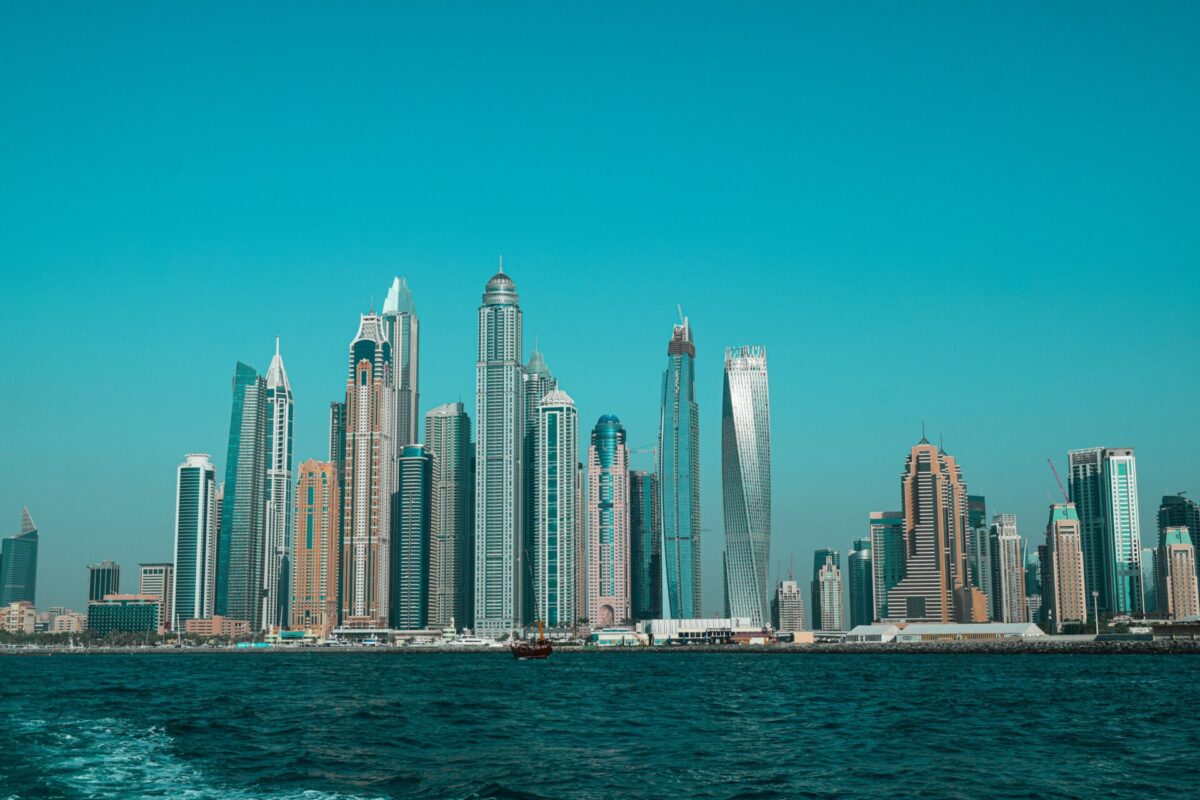
In terms of market infrastructure, Dubai plays in a league of its own.
The Dubai Land Department (DLD) delivers a depth of data that Asunción can only dream of. Transactions, projects, developers, valuations and service charges can all be tracked. In the first quarter of 2026, registered transaction volume reached AED 252 billion.
That is an enormous market.
But an enormous market is far from a promise that you will also be able to sell your apartment again without any trouble. Yet those two things were frequently equated during the past boom years – not least by enterprising agents.
Dubai has an enormous off-plan market, and with it has also created a myth: flipping. Buy early, pay the deposit according to the payment plan, and pass the property on at a profit before completion – for years this model was sold to European investors too as an almost self-evident strategy.
In some cases it has worked. And it is precisely with these successful deals that people then, naturally, both boasted freely and marketed heavily.
Considerably more often, however, the dream of quick money eventually shrank into nothing more than the hope that an even more optimistic buyer would turn up in time.
C-locations hyped by highly efficient hard-sell operations, such as JVC (Jumeirah Village Circle) or JVT (Jumeirah Village Triangle), are impressive examples of this. Enormous volumes have been built there in recent years and sold to international investors. Thousands of new apartments are pressing simultaneously onto a market whose actual rental demand was by no means limitless even before the current crisis.
The result can now be seen in the resale market. An analysis of DLD registry data up to the end of July 2026 arrives at a remarkable finding for identifiable resales in JVC/JVT: around a third changed hands below the original purchase price.
That is no longer a small statistical dent, and it is not a problem caused by the Iran war either. It is a structural problem that already existed beforehand and was foreseeable.
The war meets a market that was not exactly healthy everywhere to begin with
Since the war began, one thing has simply been added that barely featured in many a Dubai presentation for years:
Geopolitical risk.
Dubai and the Emirates were happily sold as a safe haven in an otherwise turbulent region. Since missiles and drones have stopped landing only somewhere in the neighbouring Gulf states, that narrative has become harder to sustain.
That does not mean Dubai is heading for a property crash.
But the market has reacted. As early as March, Reuters documented significant declines in transaction numbers and price discounts on individual properties. In August, the number of residential sales was markedly below the record level of the previous year.
And this additional uncertainty is hitting sub-markets that, of all times right now, are already carrying a great deal of speculative capital.
Anyone who bought an apartment for long-term letting in a high-demand location is in an entirely different situation from a buyer whose brilliant plan consisted of "pay the deposit – wait – sell on at a higher price".
The latter is currently discovering an unpleasant characteristic of payment plans:
They keep running relentlessly, war or crisis notwithstanding.
If the intended buyer for the flip fails to appear, the supposedly clever leverage strategy suddenly turns into a capital requirement. Anyone who cannot or will not service it has to sell. And in doing so runs into other sellers with the same problem – while the developer next door is already pushing the next residential tower, complete with new payment plans, onto the market.
That is how a downward spiral emerges without any property crash at all.
"Dubai always goes up" was always a fairly poor investment strategy. In 2026 it has become an even worse one. Even in interesting markets like Dubai, location, location, location still applies.
Panama City: perhaps an investment does not have to be sexy at all
Panama City has a hard time in this comparison.
Everyone knows Dubai. Asunción is the bet on a young market.
And Panama?
Sits somewhere in between.
At first that does not sound especially exciting. For part of one's wealth, however, "not especially exciting" need not be a drawback.
Panama has had an established international property market for decades. The US dollar is the medium of payment and the economic reference currency. Foreigners can acquire outright ownership directly.
Current prices sit well below those of many comparable international metropolises. Gross rental yields in good residential locations often move in the range of roughly six to eight per cent; current market data puts the average for Panama City at around 7.6 per cent.
Naturally, gross is not net.
Particularly in modern residential complexes with concierge, security, pool, gym and so on, condo fees can add up to 3–4 USD per square metre. On top of that come management, maintenance and, where applicable, vacancy. Anyone who derives their personal profit from an advertised gross yield has miscalculated thoroughly.
In return, Panama offers something that can be remarkably pleasant in international real estate:
little drama.
No gigantic off-plan hype as in parts of Dubai. No market that still has to prove itself, as in Asunción. And currently no war on the doorstep either.
Perhaps Panama City is the most boring candidate in this comparison – and that is meant entirely as a compliment.
Asunción: buying before the whole story has been told
The property market in Asunción sits at a completely different point in its development, namely still fairly early on.
Anyone driving through the Paraguayan capital today sees a city in transformation. New office, hotel and residential towers are rising along the main development axes, and entire streets and neighbourhoods are fundamentally changing character.
We have already written about this development in detail elsewhere.
For property investors, one thing about this is particularly interesting:
The market is still young and accordingly offers considerable upside potential.
Apartments in good locations in Asunción are currently on offer at roughly USD 1,700 to 1,800 per square metre. That is considerably less than in Dubai, and often also less than in Panama City.
But "cheap" is not an investment thesis.
And Asunción has a drawback that should not be played down: market transparency is fairly poor.
There is no equivalent to the Dubai Land Department from which tens of thousands of actual transactions can be pulled with a few clicks. Many market reports rely on listing data. Advertised rental yields of eight, ten or even more per cent look correspondingly pretty – until operating and management costs, the latter not to be underestimated particularly with short-term letting (Airbnb and the like), show up in the calculation.
For sensibly selected apartments in good locations, net yields in the upper single digits appear considerably more realistic.
That is still interesting. Just not a money-printing machine.
Bought in dollars. Let in guaraní.
And then Asunción has a peculiarity that plays no real role in the dollar or dollar-linked markets of Dubai and Panama.
On the purchasing side, the modern apartment market is practically dollarised. The major developers calculate and market in USD. Even Paraguay's government defines the property threshold for its new Investor Pass at 200,000 US dollars rather than in the national currency, the guaraní.
On the rental side, however, the picture is split.
A substantial share of contracts run in dollars, another in guaraní.
This means that an apartment bought for USD 200,000 can subsequently produce cash flow in PYG.
Over the past year that was a distinctly pleasant side effect for European owners with a guaraní lease, since the guaraní has appreciated considerably against the euro. An unchanged PYG rent suddenly had, in euro terms, roughly a fifth more value.
For a Paraguayan with a fixed dollar rent and living costs in guaraní, the same mechanism works in the opposite direction.
One property – and a Plan B thrown in
Since April 2026, Paraguay has caught up with the other two candidates in one interesting respect by introducing its Investor Pass.
All three locations now therefore offer the possibility of combining a property investment with a right of residence.
There are, however, some quite significant differences:
In Panama, a property investment from USD 300,000 can qualify for the Qualified Investor visa. This sum must actually be invested; if the purchase price exceeds it, the amount above that threshold can, subject to the statutory requirements, be financed.
Dubai requires a property investment of AED 2 million (roughly EUR 500,000) for a ten-year residence permit – the famous "Golden Visa". Bank-financed properties can also qualify for this. Off-plan is possible as well.
Paraguay takes a notably different approach.
Here, the qualifying property investment amounts to USD 200,000. At the time of application, at least 30 per cent of that must actually have been paid.
For an apartment costing exactly USD 200,000, that is therefore just USD 60,000.
The remainder can follow, for a property still under construction, in line with the agreed payment plan.
In return, the investor does not initially receive some provisional residence title but is granted, immediately, the permanent, unlimited Residencia Permanente.
After two years, a check is carried out on whether the promised investment was actually implemented as agreed. For a project not yet completed, that means in particular: were the agreed instalments paid?
The two years are by no means an arbitrary figure. Anyone taking the normal route to a residence title – without an investment – first goes through a two-year fixed-term phase (Residencia Temporal) before the permanent status follows.
The Investor Pass brings this status forward.
And it is precisely at this point that a property suddenly becomes more than a capital investment.
Anyone still living in Europe today does not therefore need to keep an empty apartment in Asunción on standby as a personal bolthole. The property can be let and can earn money. At the same time, the residence option already exists.
Should Plan B ever turn into Plan A, one does not have to start the paperwork battle only then.
The residency must never have to justify the property
At this point, one iron rule applies for us:
Never invest solely in order to obtain a residency or a Golden Visa!
If you would not buy the property without the residence title, you should not buy it with the residence title either.
The residency is a bonus – not a substitute for value.
The combination can make an already sensible purchase considerably more attractive. It can combine geographic diversification with personal freedom of movement.
But an overpriced apartment in a poor location remains an overpriced apartment in a poor location.
Even with a plastic card in your wallet.
So who wins?
That depends on what you want to buy.
Dubai offers a huge, professional and superbly documented property market. Precisely because of that, it is fairly easy to see there just how dangerous it is to confuse the size of a market with the liquidity of your own investment. The war brings an additional risk into 2026 whose price nobody yet knows, particularly as the conflict is dragging on and could well expand further still.
Panama City does not push itself forward. Perhaps that is its greatest quality. An established dollar market with decent yields and a residency option that, for now, needs neither a grand growth story nor a grand disaster story.
Asunción sits considerably earlier on the development curve. Entry prices are lower and the market less transparent. In return, an investor can participate in an urban transformation that, at other locations, already lies years or decades in the past. The Investor Pass makes this combination additionally attractive for anyone already looking for a Plan B.
There is therefore no winner.
But there certainly are wrong decisions.
Anyone buying in JVC because someone told them Dubai always goes up is making no better deal than someone who buys some tower off a rendering in Mburicao because Asunción happens to be booming right now.
A city can boom overall while a particular apartment in an unsuitable location is still a poor investment.
That is precisely why international diversification does not begin with the question of the highest yield, but with the question of what job this piece of concrete is actually supposed to do within your wealth.
True to our principle: Sometimes the best solution begins with an entirely different question.
More perspectives
Economy & Jurisdictions
Asunción – The Underrated Metropolis
A city grows upward – and into the future. Evolution Asu 2030! Urbanisation in fast-forward. How Paraguay's capital is currently reinventing itself.
Read articleEconomy & Jurisdictions
Panama: A Small Country on the World's Great Currents
Panama is more than a canal and a tax topic. The location combines world trade, ports, air transport, a dollar economy, a financial centre and territorial taxation – while becoming regulatorily more demanding at the same time. A sober location analysis for entrepreneurs, investors and internationally mobile private individuals.
Read articleTaxes & Structures
Dubai and the UAE: What's Really Left of Tax-Free
The UAE remains one of the most tax-attractive jurisdictions in the world. But the simple zero-tax narrative has turned into a genuine tax system. Anyone who knows the rules and sets up their structure correctly will still find exceptionally attractive conditions here.
Read article