Economy & Jurisdictions
The Dominican Republic as a life centre: who the country actually works for
Jacqueline Neve · 14 July 2026 · 11 min read
The Dominican Republic is not among the countries that automatically top international location comparisons.
It has no particularly dense network of double taxation treaties. Its infrastructure does not everywhere meet European standards. And for internationally active entrepreneurs, its tax law is by no means as simple as the catchphrase “territorial taxation” suggests.
And yet the Dominican Republic can be a strikingly convincing life centre for certain people.
Because choosing where to live is about more than tax optimisation.
Someone who, after decades of professional obligations, is not looking for the next international business hub but for nature, climate, space and a more self-determined everyday life weighs different factors more heavily than someone seeking to optimise their corporate structure for maximum tax efficiency.
The Dominican Republic becomes interesting precisely where both come together: the country offers comparatively accessible residence models, and with Ley 171-07 a remarkable special regime for foreign pensioners and rentistas.
That does not make it a tax haven. But for the right person, it may be the right place.
1. There is no single Dominican Republic
The question of whether one can live well in the Dominican Republic can hardly be answered without first asking: where?
Santo Domingo is a metropolis of millions and the country's economic centre. Santiago offers urban life on a smaller scale. Punta Cana and Bávaro have a heavily internationalised infrastructure, but are shaped accordingly by tourism and property development.
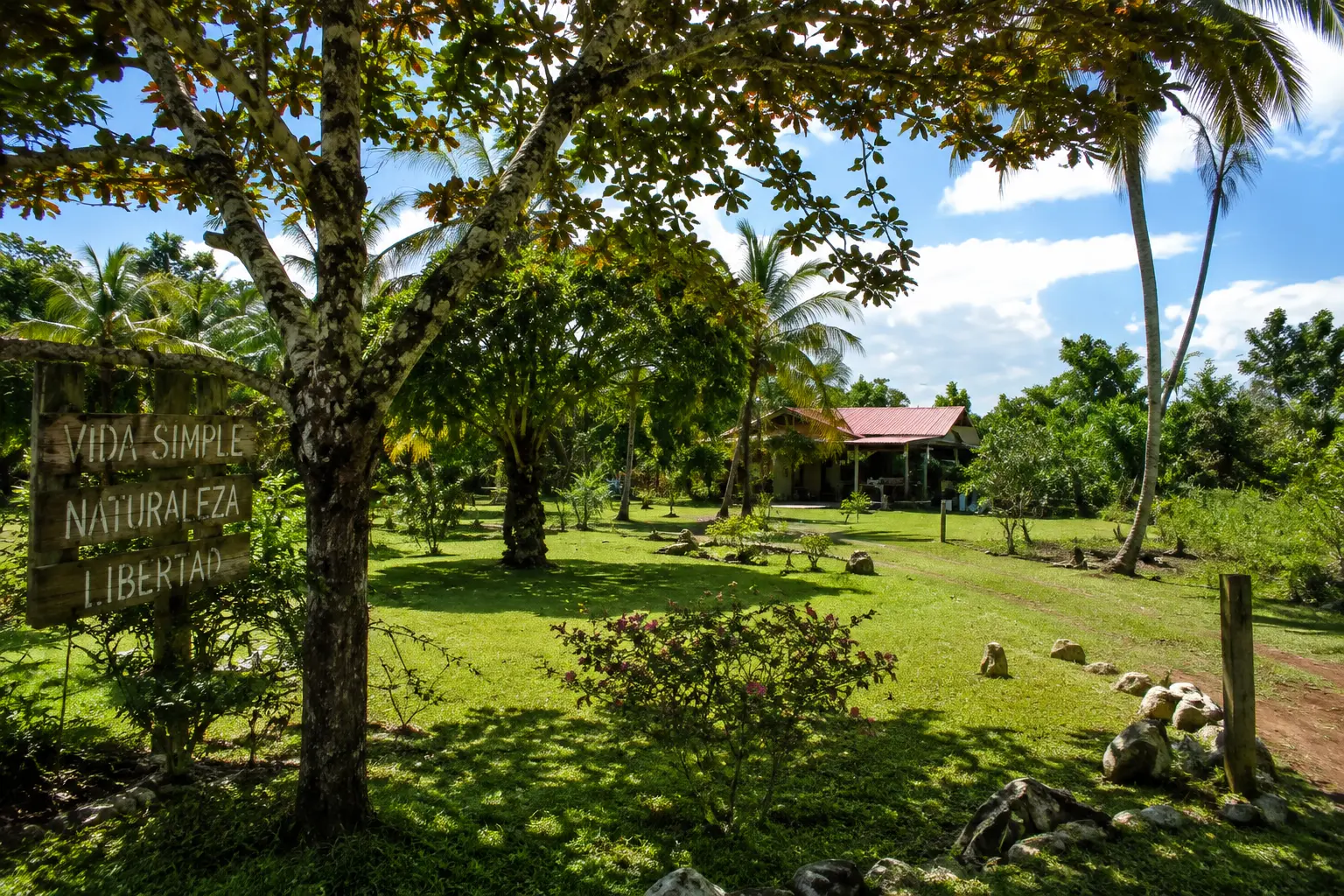
On the north coast, around Cabarete or Puerto Plata, for instance, life looks quite different again. Samaná and Las Terrenas combine nature with a pronounced international community. Inland, regions such as Jarabacoa offer mountains, cooler temperatures and a way of life that has little in common with the classic Caribbean image.
That makes choosing the specific location almost as important as choosing the country itself.
Someone seeking a finca, nature and as much self-reliance as possible has different requirements from someone who needs international schools, high-quality medical care and urban infrastructure right on their doorstep.
„The Dominican Republic is less a single, unified location than a collection of very different ways of life.“
2. Residence: accessible, but not merely a paper status
In the Dominican Republic too, terms need to be kept apart that easily get muddled in everyday emigration talk.
A residence permit answers the immigration-law question of whether a person is allowed to live in the country. The Cédula is an identity document. And tax residence, in turn, is governed by tax-law criteria.
None of these documents automatically answers the other questions.
The Dominican Republic offers various routes to residence. For the typical international clientele, the special routes for pensioners and rentistas are particularly interesting.
Other categories exist alongside these, for instance for investors. This article, however, is not intended as a complete visa catalogue.
What matters is which residence category actually fits the person's real way of life.
3. Pensionado: US$1,500 in monthly pension
A special residence procedure exists for foreign pensioners and retirees.
The basic requirement is a monthly pension of at least US$1,500, or the equivalent amount in Dominican pesos. For each dependant directly included, the required amount rises by US$250 per month.
What matters here is actually the character of the income.
The Dirección General de Migración explicitly points out that salary income does not suffice for this purpose. A regular transfer from abroad does not become a pension merely by arriving every month.
The procedure is therefore aimed in particular at people whose active working life has genuinely ended and whose living costs are permanently secured through a pension or comparable retirement provision.
4. Rentista: US$2,000 in permanent foreign income
For people who do not live off a classic pension, the Rentista category may be more interesting.
The immigration authority generally requires a permanent monthly income from a foreign source of at least US$2,000.
Here again, the mere assertion of having sufficient assets is not enough.
The authority requires evidence of the source of income, citing, for example, dividends from a foreign company shareholding, income from foreign real estate, or holdings with foreign banks.
That makes the category particularly interesting for people whose living costs are sustainably covered by assets, shareholdings or other regular foreign income.
„Wealth and income, however, are not the same thing here either.“
A large investment portfolio does not automatically satisfy a requirement for permanent monthly income.
5. Ley 171-07: this is where it gets interesting from a tax perspective
Pensionado and Rentista are not merely two immigration-law categories.
Ley 171-07 sobre Incentivos Especiales a los Pensionados y Rentistas de Fuente Extranjera links the arrival of qualifying foreign pensioners and rentistas to particular tax benefits.
And these go considerably further than one would expect from a mere residence programme.
- Exemption from property-transfer tax on the first property acquired
- 50 per cent exemption from certain mortgage taxes
- 50 per cent exemption from the Impuesto sobre la Propiedad Inmobiliaria (IPI), where it applies
- Exemption from tax on dividends and interest arising domestically or abroad
- 50 per cent exemption from capital gains tax in the statutorily defined special case, in particular where the rentista is the majority shareholder of the company concerned and that company carries on no commercial or industrial activity
The second-to-last point in particular is significant.
Because general Dominican tax law can capture certain foreign investment and financial income for tax-resident individuals.
For a qualifying Pensionado or Rentista under Ley 171-07, the calculation can therefore look completely different.
A special regime is not a general tax rule
However, the benefits under Ley 171-07 should not be confused with general Dominican tax law.
Anyone who does not meet the requirements of the special regime cannot claim its tax exemptions simply because they, too, have moved in from abroad.
And even for those who do benefit, it is not a blank cheque for every conceivable type of income.
„A Pensionado/Rentista under Ley 171-07 and an ordinary tax resident are not the same thing for tax purposes.“
6. The model presupposes a genuine connection to the country
An interesting aspect of the Rentista procedure becomes visible if one looks not only at the initial application but also at the immigration authority's ongoing requirements.
The DGM requires, among other things, evidence of the foreign income and of its receipt within the Dominican Republic. A Dominican bank account and corresponding proof of income already play a role at the application stage, and throughout the process.
That fits the underlying idea of the system: it is aimed at people who genuinely want to relocate their life centre to the Dominican Republic.
This distinguishes the model conceptually from residence solutions whose primary purpose is to hold a low-maintenance status somewhere, while actual life takes place entirely in other countries.
„The model is oriented more strongly toward a genuine economic connection to the country than toward a bare residence card with no further points of attachment.“
7. Residence, Cédula and tax residence are three different things
The Dominican Republic is a particularly good illustration of a distinction that is fundamentally important for international mobility.
The immigration authority itself distinguishes in its procedures between the Carnet de Residencia and the certificate required for the Cédula.
The Carnet documents immigration-law residence status. The Cédula is the Dominican identity document. Tax residence does not follow from either automatically.
Under the Dominican Código Tributario, a natural person is generally regarded as tax resident if they spend more than 182 days within a tax year in the country – continuously or with interruptions.
In practice, then, we are regularly talking about at least 183 days of presence.
„Residence permit ≠ Cédula ≠ tax residence ≠ tax registration.“
For a systematic account of how to keep these levels apart, see the foundational article “Domicile, residency, tax residence: seven terms that are constantly confused”.
8. Is the Dominican Republic a territorial tax country?
This is where one of the most persistent myths about the country begins.
The Dominican Republic is routinely described as a state with territorial taxation.
As a shorthand, that is not entirely wrong. As a basis for tax planning, however, it is dangerously incomplete.
Article 269 of the Código Tributario generally captures, for taxpayers resident or domiciled in the Dominican Republic, income from Dominican sources as well as certain income from foreign sources, insofar as it derives from investments and financial gains.
The DGII expressly clarified this framework again in 2025, describing the Dominican system as a mixed system. There is expressly no comprehensive worldwide-income principle. Certain foreign investment and financial income can nonetheless be captured for residents.
“In the Dominican Republic, foreign income is tax-free.”
Assessment
False.
“Anyone tax resident there automatically pays tax on their entire worldwide income.”
Assessment
Also false.
The correct answer depends on the type of income.
9. Foreign income: the special three-year rule
For people newly moving to the Dominican Republic, Article 271 of the Código Tributario contains a further particularity.
Natural persons who become resident are, generally speaking, first captured for tax purposes on foreign income covered by Dominican law only from the third year, or tax period, after residence is established.
Even from this, one should not draw the blanket conclusion:
„Foreign income is tax-free for three years.“
The three-year rule changes nothing about the fact that it must first be established which income Dominican law even treats as taxable foreign income in the first place.
Dominican-source income does not become automatically tax-free as a result of this either.
And for qualifying Pensionados and Rentistas, the special regime under Ley 171-07 may again be decisive.
10. Pensioner, private investor and entrepreneur: three entirely different cases
This is exactly where it becomes clear why a location decision should never be made solely on the basis of a country's name.
A pensioner with a qualifying foreign pension can benefit from Ley 171-07.
A Rentista whose living costs derive from dividends, interest or other qualifying income can likewise fall under a strikingly interesting special regime.
A wealthy private investor outside this regime, by contrast, must examine in particular how their foreign investment and financial income is treated.
And an entrepreneur working day to day from the Dominican Republic faces yet other questions.
„The same address can, for tax purposes, house four entirely different life situations.“
11. A foreign company does not automatically mean foreign activity
For entrepreneurs and remote workers in particular, the simplified notion of the territorial principle is especially dangerous.
A US LLC, a British Ltd, or any other foreign company only answers the question of under which law a company was formed.
It does not automatically answer:
- where the operating activity is carried out
- where a management function is located
- whether a tax nexus arises in the state of residence
- or whether a permanent establishment exists there
The Dominican Código Tributario expressly recognises the concept of the establecimiento permanente, i.e. the permanent establishment.
Article 270 cites, among other things, fixed places of business such as management locations, offices and branches, and, under certain conditions, prolonged consulting services and agency structures as well.
A company does not become tax-invisible merely because its certificate of incorporation comes from Delaware.
„Place of incorporation, actual activity, management and permanent establishment are different points of attachment.“
How these points of attachment can diverge is shown in the foundational article “Registered seat, management, permanent establishment: where does a company actually sit?”.
For actively working international entrepreneurs, the Dominican Republic is therefore not a location to be planned around solely with the formula “territorial taxation + US LLC”.
12. A thin treaty network is a genuine disadvantage
In international tax planning, attention often falls on national tax rates while the treaty network is forgotten.
This is precisely where the Dominican Republic is not a particularly strong location.
Its network of double taxation treaties is very limited.
For someone from Germany, Austria or Switzerland, that means: one should not assume that conflicts between the tax systems involved will be absorbed by a comprehensive bilateral treaty.
This can become relevant in particular with withholding taxes, dividends, shareholding structures, director's remuneration or other cross-border income.
„A low or non-existent tax rate in the country of residence helps little if substantial withholding tax remains stuck at the other end of a structure.“
Tax optimisation does not consist of looking at only one side of the border.
13. New since June 2026: Ley 30-26 changes details – not the system's DNA
This article reflects the legal and factual position as of 14 July 2026.
On 18 June 2026, Ley 30-26 was promulgated. The reform changes numerous tax and procedural provisions.
For internationally active individuals and companies, one change concerning certain cross-border payments is of particular interest.
For certain payments by Dominican companies to non-resident foreign recipients – including in connection with certain rights, software licences, digital advertising and cloud services – the withholding tax was reduced from 27 to 15 per cent.
After the law was passed, the Dominican government explicitly clarified that this does not introduce a new tax on digital subscriptions for Dominican consumers.
The reform also contains changes to tax procedural law and a time-limited amnesty scheme for certain past cases.
For someone newly moving to the country, however, these points are not the real argument for the location.
„Ley 30-26 changes individual parameters. It does not turn the Dominican Republic into a new tax haven, nor does it change the fundamental structure of Dominican tax law.“
Anyone planning their location still needs to distinguish between Dominican-source income, foreign investment and financial income, special regimes, and corporate structures.
14. Real estate: choose where to live first, then the property
Real estate inevitably plays a large role when it comes to the Dominican Republic.
The offering ranges from apartments in Santo Domingo, through tourist-oriented projects in Punta Cana, to houses on the north coast and larger plots inland.
For beneficiaries of Ley 171-07, the tax benefits described above apply on top when the first property is acquired.
Even so, the property should not be the starting point of the location decision.
A project can be marketed brilliantly and still miss the actual way of life it is meant to serve.
More important, first, are questions such as:
- How good is accessibility?
- How reliable are electricity, water and internet?
- What medical care is reachable?
- What does everyday life look like outside the tourist season?
- What are the actual security and infrastructure conditions on the ground?
- And does one actually want to live there for several years?
„The life centre comes first. Then the property.“
15. Infrastructure: freedom demands a degree of self-reliance
At this point the Dominican Republic should not be romanticised.
The quality of infrastructure varies considerably by region.
The power supply in particular has been a structural issue for years. Anyone living outside particularly well-served locations may find themselves dealing with things that would barely feature in a location decision in central Europe.
- Solar power
- Battery storage
- A generator
- Water reserves
- Internet redundancy
- Access road
That does not mean a comfortable life there is impossible.
On the contrary: with the right planning, one can achieve a very high individual standard of living.
But part of that standard may be organised privately rather than simply provided as a matter of course by public infrastructure.
And this is exactly where opinions divide.
One person finds this tiresome. Another experiences precisely this greater self-reliance as freedom.
16. Those who, after 40 years in a tie, want something different
There are people who, after decades of professional careers, are not looking for the next perfect business hub.
They do not want a 37th floor. No lounge. No calendar full of meetings.
Perhaps they want a plot of land. A garden. Animals. Sea. Mountains. Or simply the ability to decide each morning what to do with their day.
For these people, classic location rankings are only of limited use.
A perfectly organised metropolis can score objectively excellent figures and still be the wrong place.
The Dominican Republic, by contrast, offers ways of life in which space, nature and personal self-reliance can play a considerably larger role.
That is hard to measure. But no less real for it.
17. Who does the Dominican Republic actually work for?
Viewed through immigration, tax and practical everyday criteria, a fairly clear picture emerges.
The Dominican Republic can be particularly interesting for:
- pensioners and rentistas who genuinely want to live there and meet the requirements of Ley 171-07
- people who weight nature, land and self-reliance more heavily than flawless public infrastructure
- wealthy private investors, provided the specific composition of their income fits the Dominican system
The location deserves closer scrutiny in the case of:
- remote workers
- actively working international entrepreneurs
- complex shareholding and corporate structures
- individuals with substantial foreign investment and financial income outside a special regime
The Dominican Republic is a less obvious fit for people who are merely seeking the lowest-maintenance residence status as a piece of paper, or the mathematically lowest tax rate.
For them, more suitable solutions probably exist elsewhere internationally.
Not the most efficient location. Perhaps the right one.
International location decisions are treated remarkably often as a competition.
Where is tax lowest? Where can one get residence fastest? Where is the company cheapest to set up? Where are the fewest days of physical presence required?
These questions are legitimate. They simply do not answer the most important one:
„Where do I actually want to live?“
For an internationally active entrepreneur seeking to organise corporate structure, shareholdings and capital investments with maximum efficiency, there are locations that are objectively simpler to structure than the Dominican Republic.
For a pensioner or Rentista, the tax calculation may already look entirely different.
And for someone who, after decades within fixed professional structures, is above all looking for nature, space and a more self-determined everyday life, factors that appear in no tax table can become decisive.
There is therefore no need to declare the Dominican Republic a tax haven, nor to romanticise it.
One needs to know what it can do. One needs to know what it cannot do. And above all, one needs to know why one wants to live there.
Sources & further data
- Dirección General de Migración (DGM) — Residencia por inversión en calidad de Jubilado o Pensionado — Official description of the procedure and requirements for residence for foreign pensioners
- Dirección General de Migración (DGM) — Residencia por inversión en calidad de Rentista — Official description of the procedure and evidentiary requirements for residence for Rentistas
- Dirección General de Impuestos Internos (DGII) — Código Tributario — Statutory text of the Dominican tax code, in particular Arts. 269–271
- Ley 171-07 sobre Incentivos Especiales a los Pensionados y Rentistas de Fuente Extranjera — Statutory basis for the special regime for foreign pensioners and rentistas
- DGII — publications on the treatment of foreign income and tax residence — Official guidance on the treatment of Dominican and foreign income for residents
- Ley 30-26 of 18 June 2026 — Reform law with changes including to withholding tax on certain cross-border payments
- DGII — implementation guidance on Ley 30-26, as of 29 June 2026 — Official guidance on the application of the reform, including procedural law and the amnesty scheme
More perspectives
Taxes & Structures
Wohnsitz, Residency, Steuerresidenz: Sieben Begriffe, die ständig verwechselt werden
„Ich bin doch Resident.“ „Ich habe dort eine Steuernummer.“ „Ich bin in Deutschland abgemeldet.“ Alle diese Sätze können zutreffen – und beantworten trotzdem völlig unterschiedliche Fragen. Ein Grundlagenartikel über sieben Begriffe, die im internationalen Alltag ständig vermischt werden.
Read articleTaxes & Structures
Registersitz, Geschäftsleitung, Betriebsstätte: Wo sitzt eine Gesellschaft eigentlich?
„Meine Firma sitzt in Wyoming.“ „Die Gesellschaft ist doch in Dubai.“ „Wir haben eine Niederlassung in Paraguay.“ Alle diese Sätze können richtig sein – und beantworten trotzdem völlig unterschiedliche Fragen. Das Schwesterstück zum Grundlagenartikel über die Verortung natürlicher Personen.
Read article